
Podcasting has become one of the fastest-growing channels for professional services marketing, and law firms are discovering its unique power to build trust before a prospective client ever picks up the phone. Unlike written content that competes for attention in crowded search results, audio creates an intimate connection—listeners hear your voice, your reasoning process, and your personality while commuting, exercising, or doing household tasks.
For attorneys willing to commit to consistent production, podcasting offers a direct path to becoming the recognized authority in your practice area. The barrier to entry is lower than most lawyers assume, but success requires understanding the technical setup, content strategy, and distribution tactics that separate hobbyist shows from client-generating marketing assets.
Why Podcasts Work for Law Firm Marketing
Audio content solves a fundamental problem in legal marketing: demonstrating expertise without triggering the sales resistance that comes with traditional advertising. When someone listens to you explain complex legal concepts for 20 or 30 minutes, they develop a sense of familiarity that no billboard or Google ad can replicate.
The positioning advantage is substantial. Most practice areas have dozens of attorneys competing for the same keywords with blog posts and service pages. Far fewer have established podcast presences. A family law attorney who publishes weekly episodes on custody disputes and divorce planning becomes the default expert in listeners’ minds, even if competitors have more years in practice.
Trust builds differently through audio. Listeners hear how you break down complicated statutes, the empathy in your voice when discussing sensitive topics, and your ability to make legal processes understandable. This matters especially for practice areas where clients feel vulnerable—estate planning, criminal defense, employment disputes, immigration cases.
The reach extends beyond your local market initially but often circles back. A personal injury podcast might attract listeners nationwide, but when someone in your jurisdiction needs representation, you’re already the attorney they feel they know. Several successful legal podcasters report that new clients frequently mention binge-listening to multiple episodes before scheduling a consultation.
Podcasting also creates networking opportunities that traditional marketing can’t match. Other attorneys, potential referral sources, and industry professionals often become regular listeners, leading to collaborative relationships and case referrals that emerge organically from your content.
How to Set Up Your Law Firm Podcast
Equipment and Recording Setup
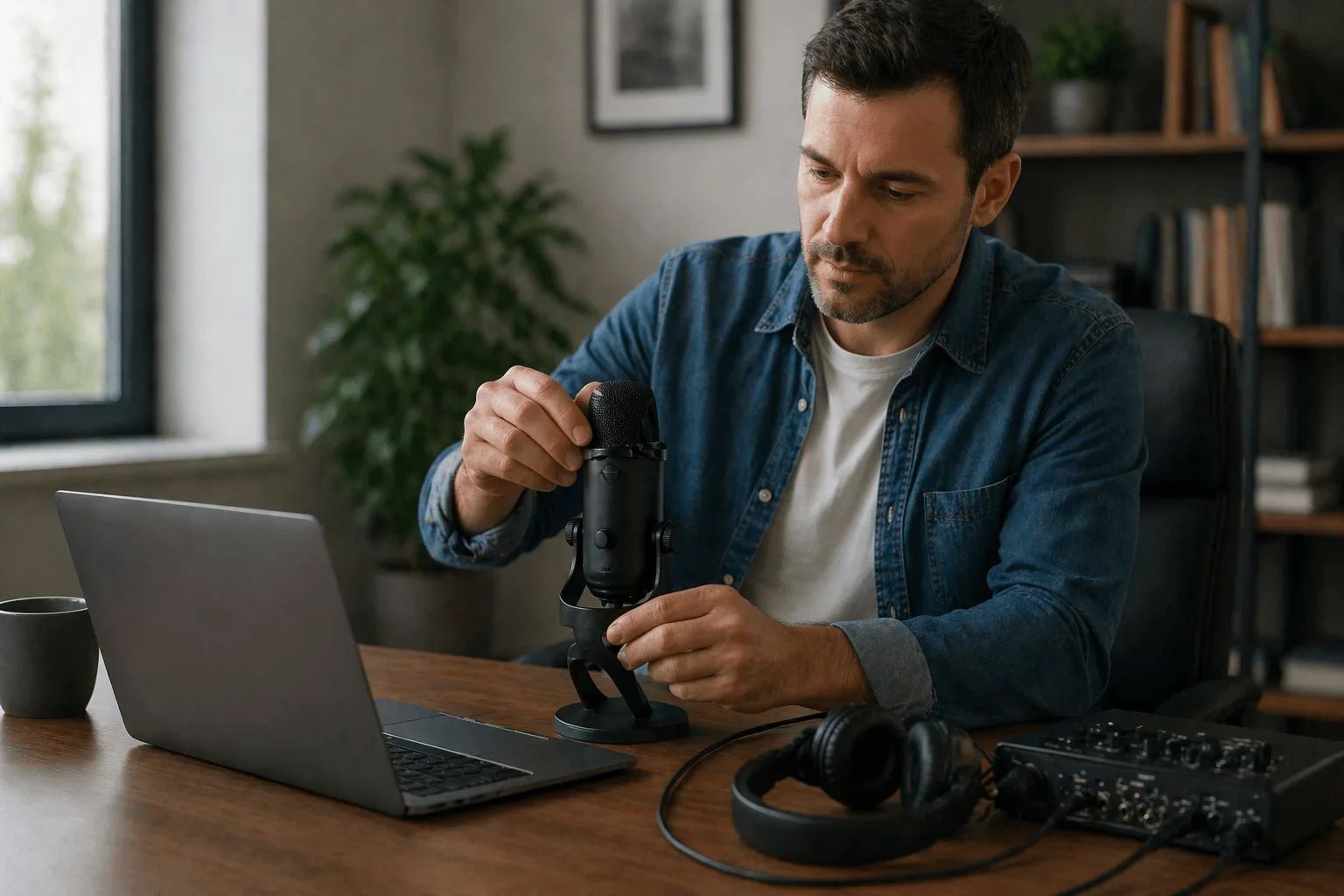
The minimum viable setup costs less than many attorneys spend on a single networking dinner. You need a USB microphone ($80-150 for quality options like the Audio-Technica ATR2100x or Samson Q2U), headphones ($40-80), and free recording software like Audacity or GarageBand.
Recording space matters more than expensive equipment. A small office with bookshelves, curtains, and upholstered furniture dampens echo naturally. Attorneys who record in large conference rooms with hard surfaces get hollow, unprofessional audio that undermines credibility. If your office is too reverberant, recording in a parked car produces surprisingly clean sound.
For interview-format shows, Riverside.fm or SquadCast capture separate high-quality audio tracks from each participant, avoiding the tinny sound of typical video calls. Budget $20-40 monthly for these services if you plan regular guest episodes.
Editing doesn’t require professional skills for most legal podcasts. Removing long pauses, obvious mistakes, and adding intro/outro music takes 30-45 minutes per episode once you develop basic competency. Alternatively, services like Descript offer AI-powered editing where you edit the transcript and the audio adjusts automatically—expect to spend $25-50 per episode for this convenience.
Choosing Your Format and Show Structure
Solo commentary works well when you have strong opinions and can speak conversationally without a script. A tax attorney might record 15-minute episodes explaining new IRS guidance or recent court decisions. This format requires minimal coordination but demands comfort with unscripted speaking.
Interview shows distribute the content burden and bring guests’ audiences to your podcast. A business law attorney might interview entrepreneurs about legal challenges they faced while scaling, or fellow attorneys about niche practice areas. The trade-off: scheduling, pre-interview preparation, and managing guest audio quality.
Panel discussions create dynamic conversation but multiply the logistical complexity. Three attorneys debating recent Supreme Court decisions generates engaging content but requires coordinating schedules and managing crosstalk during recording.
Episode length should match your content depth and audience patience. Complex legal analysis might justify 40-50 minutes. Quick updates on regulatory changes work better at 12-15 minutes. Most successful legal podcasts settle into the 20-30 minute range—long enough for substantive discussion, short enough to finish during a typical commute.
Naming matters more than most attorneys realize. “The Smith Law Firm Podcast” tells potential listeners nothing about content or value. “Divorce Decoded” or “The Employment Law Briefing” immediately communicates the focus and benefit.
Legal and Compliance Considerations
Bar rules governing attorney advertising apply to podcasts in most jurisdictions. Any episode that discusses your services or encourages listeners to hire you likely constitutes advertising requiring appropriate disclaimers. The specific language varies by state, but generally you’ll need to clarify that podcast content doesn’t create an attorney-client relationship and listeners shouldn’t act on information without consulting qualified counsel.
Discussing hypothetical scenarios based on common fact patterns typically avoids ethical problems. Sharing details from actual cases, even without client names, risks confidentiality violations unless you have explicit permission or the information is entirely from public records.
Some states require attorney advertising to be filed with the bar or include specific disclaimer language. Check your jurisdiction’s rules before launching—most legal podcasters add a standard disclaimer at the episode beginning and in show notes.
Avoid anything that could be construed as solicitation of specific individuals or guarantees about case outcomes. Explaining general legal principles and processes stays safely within ethical boundaries.
Finding Topics That Attract Your Ideal Clients
The best podcast topics emerge from questions prospective clients ask during consultations and the concerns that keep them up at night before they hire an attorney. Mine your intake calls, consultation notes, and client emails for recurring themes.
Structure topics around decision points rather than abstract legal concepts. “Should I accept the first settlement offer after a car accident?” works better than “Understanding personal injury negotiations.” The first addresses a specific moment of uncertainty; the second sounds academic.
Here are topic frameworks across different practice areas:
Estate Planning: “Five estate planning mistakes that create family conflict after you’re gone” or “When a simple will isn’t enough: red flags that you need a trust”
Criminal Defense: “What actually happens during a DUI stop—your rights at each stage” or “Should you accept a plea bargain? Four factors to consider”
Business Law: “Contract clauses that small businesses overlook until it’s too late” or “When to hire your first employee vs. continuing with contractors”
Family Law: “How judges decide custody when both parents seem fit” or “Dividing retirement accounts in divorce: tax traps to avoid”
Immigration: “Employment-based green card timeline: realistic expectations for 2026” or “What triggers USCIS audits and how to prepare”
Employment Law: “Severance negotiation: what employers expect you to accept vs. what you can actually get” or “Non-compete agreements after the FTC rule changes”
Real Estate: “Title insurance: understanding what you’re actually buying” or “Commercial lease negotiation for first-time business tenants”
Personal Injury: “How insurance companies calculate settlement offers—and why their first number is always low” or “Medical treatment gaps that damage injury claims”

Seasonal topics maintain relevance year after year. Estate planning attorneys can revisit year-end planning every November. Tax attorneys cover filing deadline strategies each spring. Employment lawyers discuss holiday party liability every December.
Current events provide timely hooks. When legislation passes, court decisions emerge, or regulatory changes occur, rapid-response episodes position you as the go-to expert interpreting what it means for your audience.
Distribution and SEO Strategies for Legal Podcasts
Podcast Platforms and Directories
A podcast hosting service (Buzzsprout, Libsyn, Transistor, or similar) stores your audio files and generates the RSS feed that directories use to distribute episodes. Expect to spend $12-35 monthly depending on upload volume.
Submit your RSS feed to Apple Podcasts, Spotify, Google Podcasts, Amazon Music, and Stitcher at minimum. These platforms represent the vast majority of podcast listening. Each has its own submission process, but all rely on the RSS feed your hosting service creates.
Apple Podcasts remains the dominant directory for professional and educational content. Optimize your show description with relevant practice area keywords, but write for humans first—the description should clearly communicate who benefits from listening and what topics you cover.
Categories matter for discoverability. Most legal podcasts fit under “Business” or “Education,” with subcategories like “Careers,” “Entrepreneurship,” or “How To.” Choose the category where your ideal clients actually browse rather than the most obvious legal classification.
Optimizing Show Notes and Descriptions
Episode titles should balance keyword inclusion with click appeal. “Episode 47: Legal Stuff” wastes opportunity. “What Happens to Your Digital Assets When You Die? Estate Planning for Online Accounts” targets searchable terms while promising specific value.
Show notes serve multiple purposes: they help listeners decide whether to invest time in the episode, provide SEO value when posted on your website, and create shareable content for social promotion. Structure them with a brief episode summary (2-3 sentences), key topics covered (bulleted list), and relevant links or resources mentioned.
Transcripts dramatically expand SEO value. A 25-minute episode generates 3,500-5,000 words of searchable text. Services like Otter.ai or Descript produce automated transcripts for $10-20 per hour of audio, requiring light editing for accuracy. Publishing full transcripts on your website creates indexable content targeting long-tail keywords your audience searches.
Link each podcast episode from a dedicated page on your law firm website rather than only distributing through podcast apps. This creates owned content that builds your site’s authority and provides conversion opportunities—listeners who want more information can immediately schedule consultations or download resources.
Episode URLs should include descriptive slugs: yourfirm.com/podcast/estate-planning-digital-assets rather than yourfirm.com/episode-47. This small detail improves search visibility when people look for specific topics you’ve covered.
Podcast vs Blog Content for Law Firms
Attorneys often wonder whether to invest in podcasting, blogging, or both. The decision depends on your strengths, audience preferences, and content goals.
| Factor | Podcast | Blog |
|---|---|---|
| Production time | 2-4 hours per episode (recording, editing, show notes) | 2-3 hours per 1,500-word post (research, writing, editing) |
| SEO value | Moderate (primarily through transcripts and show notes) | High (direct indexing of full content) |
| Audience engagement | High (longer consumption time, personal connection) | Moderate (quick scanning common, shorter time investment) |
| Repurposing potential | Excellent (transcripts, clips, quotes, social posts) | Good (social snippets, email content) |
| Equipment/cost | $150-300 initial; $15-50/month hosting | Minimal (website already needed) |
| Accessibility | Passive consumption (multitasking friendly) | Requires visual attention and reading time |
| Authority building | Strong (voice creates personal connection) | Strong (demonstrates writing skill and depth) |
| Content lifespan | Long (evergreen topics remain relevant for years) | Long (with periodic updates for accuracy) |
The ideal approach for most law firms combines both formats. Record podcast episodes on topics with broad appeal, then repurpose transcripts into blog posts with additional written analysis. This maximizes the return on content creation time while serving different audience preferences.
Podcasts excel when explaining processes, telling stories, or discussing nuanced topics that benefit from conversational exploration. Blogs work better for reference content people need to search and scan quickly—checklists, step-by-step guides, or technical explanations with visual elements.
Some practice areas lean toward one format. Complex business transactions or tax planning might benefit from written content with diagrams and examples. Family law or criminal defense, where emotional support and trust matter enormously, often connects more effectively through audio.
Consider your own communication strengths. Attorneys who think verbally and enjoy conversation often find podcasting more natural than writing. Those who prefer careful word choice and structured arguments might produce better blog content with less effort.
Growing Your Legal Podcast Audience
Guest Appearances on Other Podcasts
Appearing as a guest on established podcasts accelerates audience growth more effectively than almost any other tactic. Each appearance exposes you to listeners who already consume legal or business content and might need your services.
Target podcasts that serve your ideal clients rather than other attorneys. A business attorney gains more from appearing on entrepreneurship podcasts than legal industry shows. An estate planning lawyer might guest on financial planning or retirement podcasts.
Pitch specific topics that provide value to the host’s audience rather than generic offers to “talk about what I do.” Research recent episodes, identify gaps in their coverage, and propose how your expertise fills that gap. “I noticed you haven’t covered asset protection for real estate investors—I could share the five biggest mistakes I see that expose rental property owners to unnecessary liability” works infinitely better than “I’d love to discuss business law.”
Prepare stories and concrete examples rather than abstract legal explanations. Podcast audiences want actionable insights and memorable illustrations, not treatises on case law. The attorney who shares “Here’s what happened when a client ignored this contract clause and it cost them $200,000” creates more impact than one who explains contract interpretation theory.
Always mention your own podcast during guest appearances, but frame it as a resource for listeners rather than self-promotion. “If this topic interests you, I dive deeper into asset protection strategies on my podcast, The Business Owner’s Legal Guide” plants the seed without sounding salesy.
Repurposing Audio Content Across Channels
A single podcast episode generates content for weeks across multiple channels when repurposed strategically.
The transcript becomes a 2,000-word blog post with minimal editing. Add subheadings, break long paragraphs, and include a brief introduction contextualizing the topic. This written version serves readers who prefer text and provides SEO value.
Pull 2-3 compelling quotes or insights from each episode for social media posts. Pair these with simple graphic designs (Canva templates work fine) for LinkedIn, Instagram, and Facebook. Tag any guests featured in the episode.
Create 60-90 second video clips highlighting the most valuable moment from each episode. These “audiograms” (animated waveforms with captions) perform well on LinkedIn and Instagram, driving traffic back to the full episode. Tools like Headliner or Wavve automate this process for $10-20 monthly.
Email your subscriber list when new episodes publish, but don’t just announce the episode—share one key insight from it and explain why it matters to them right now. This provides value even to subscribers who don’t listen while promoting the show to those who might.
Compile related episodes into thematic playlists or “binge guides.” A family law podcast might group all custody-related episodes into one playlist, all property division episodes into another. This helps new listeners find relevant content quickly and increases overall listening time.
Quarterly or annually, review your most popular episodes and update them with current information. A 2025 episode on employment law changes can be refreshed in 2026 with new developments, creating an updated version while preserving the original’s audience value.

Common Mistakes Attorneys Make With Podcast Marketing
Inconsistent publishing kills momentum faster than any other mistake. Listeners who discover your podcast and enjoy the first few episodes expect new content on a predictable schedule. Publishing three episodes in one week, then nothing for two months, trains your audience not to rely on you. Choose a realistic frequency—even monthly is fine if you maintain it—and build systems to stay consistent.
Poor audio quality undermines credibility immediately. Listeners forgive imperfect content but abandon podcasts with echo, background noise, or wildly varying volume levels. Test your setup, listen to recordings with headphones before publishing, and fix technical issues before they become patterns.
Overly technical content alienates the prospective clients you’re trying to reach. Remember that most listeners lack legal training and need concepts explained in plain language. The podcast that makes complex topics accessible builds a larger audience than one that showcases legal jargon to impress other attorneys.
Neglecting promotion assumes audiences will find you organically. They won’t. Share every episode across your social channels, mention it in email signatures, discuss it during networking events, and encourage satisfied clients to listen. Your existing network provides the foundation for initial audience growth.
Ignoring analytics means missing opportunities to improve. Podcast hosting platforms show you which episodes get completed versus abandoned, where listeners drop off, and which topics attract new subscribers. If listeners consistently stop at the 18-minute mark, your episodes might be too long. If certain topics generate twice the downloads, create more content in that area.
Compliance violations occur when attorneys forget that podcasts constitute advertising in most jurisdictions. Review your state’s ethics rules, include appropriate disclaimers, and avoid guaranteeing outcomes or soliciting specific individuals. The informal nature of podcasting doesn’t exempt you from professional responsibility rules.
The attorneys who succeed with podcasting understand it’s not about talking—it’s about listening to what prospective clients need to hear before they’re ready to hire. When you answer those unspoken questions consistently over months and years, you become the only logical choice when legal needs arise.
Jay Harrington, attorney and legal marketing consultant, author of “The Productivity Pivot”
FAQs
No. A quality USB microphone ($80-150), basic headphones ($40-80), and free recording software provide everything needed for professional-sounding episodes. Recording environment matters more than equipment cost—a quiet office with soft furnishings produces better audio than an expensive microphone in an echoey conference room. Many successful legal podcasts started with equipment costing under $200 total.
Most legal podcasts perform best between 20-30 minutes. This length allows substantive discussion while respecting listeners’ time and attention spans. Quick legal updates might work at 10-15 minutes, while deep-dive interviews or complex topic analysis can extend to 40-50 minutes. Consistency matters more than hitting a specific duration—choose a length you can sustain with quality content every episode.
Generally no, unless the information comes entirely from public court records and you have no confidential client information. Even then, discussing active cases risks ethical violations, confidentiality breaches, and potential harm to case strategy. Focus instead on hypothetical scenarios based on common fact patterns, legal principles applicable across situations, and general process explanations that don’t reference specific clients or pending matters.
Expect 6-12 months of consistent publishing before seeing meaningful audience growth. Early episodes typically attract your existing network—clients, colleagues, and referral sources. Organic growth through podcast directories and search happens gradually as you build a content library. Strategic guest appearances, social promotion, and SEO-optimized show notes accelerate growth, but sustainable audiences require patience and consistency rather than viral hits.
Audio-only reduces production complexity and editing time while serving how most people consume podcasts—during commutes, exercise, or household tasks when watching isn’t practical. Video adds production burden but creates additional content for YouTube and social clips. Start with audio-only to establish consistency, then add video once you’ve developed sustainable production workflows. Many successful legal podcasts remain audio-only indefinitely.
Choose a frequency you can maintain consistently for at least a year. Weekly publishing builds audience fastest but requires significant time commitment. Biweekly or monthly schedules work fine if maintained reliably—inconsistency damages audience growth more than less frequent publishing. Consider your practice demands, content preparation time, and available resources when setting your schedule. Starting monthly and increasing frequency later works better than launching weekly and becoming sporadic after two months.
Podcasting offers attorneys a powerful channel for building authority, trust, and visibility in ways that traditional legal marketing cannot match. The combination of intimate audio connection, long-form content exploration, and multi-platform distribution creates opportunities to reach prospective clients during the research phase of their legal journey.
Success requires more than just recording conversations. Effective legal podcasting demands strategic topic selection aligned with client needs, consistent production schedules, technical competency for quality audio, and systematic distribution across podcast platforms and your own digital properties. The attorneys who treat podcasting as a serious content marketing investment rather than a casual experiment see the strongest returns in audience growth and client acquisition.
The competitive landscape remains relatively open in most practice areas. While some legal niches have established podcast presences, many markets and specialties lack consistent, high-quality audio content. Attorneys who start now and commit to consistent publishing for 12-18 months can establish dominant positions before competitors recognize the opportunity.
Begin with a clear understanding of who you’re trying to reach and what questions keep them searching for answers. Invest in adequate equipment and recording environments, but don’t let perfectionism delay your launch. Develop systems for consistent production, strategic distribution, and content repurposing that maximize the value of each episode you create.
The law firms that will dominate legal marketing in the coming years understand that prospective clients want to know attorneys before hiring them. Podcasting provides that introduction at scale, building relationships with hundreds or thousands of potential clients simultaneously. Whether you’re a solo practitioner or part of a larger firm, audio content creates opportunities to demonstrate expertise, build trust, and stay top-of-mind when legal needs arise.